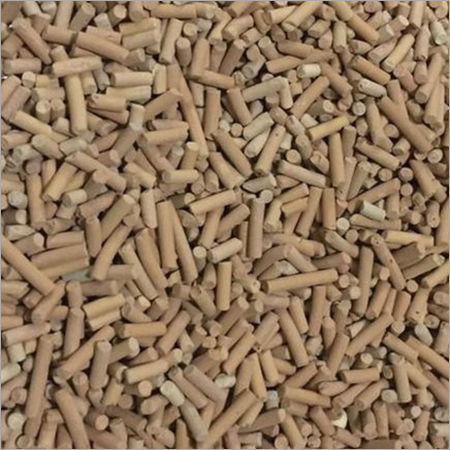
About Carbon Molecular Sieve
MNK Engineering deals in the manufacturing and supplying of Carbon Molecular Sieve that is available in small granular forms. It is commonly used in pressure swing adsorption within nitrogen gas generators. It can also be used in various other separations such as hydrogen refinement within biogas refining processes. It is highly beneficial for the separation of oxygen from nitrogen under high pressure. The offered Carbon Molecular Sieve is highly porous in nature which results in good adsorption properties.
Specification
| Form | Beads |
| Color | Black |
| Packaging Type | STANDARD |
| Purity | 99.999% |
| Usage/Application | For Nitrogen Generators |
| Application | Nitrogen Generation |
| Brand | MNK Engineering |
| Nitrogen Purity | 97+-3 % |
| Packaging | 40 Kg Drum |
High-Efficiency Adsorption for Nitrogen GenerationWith a rapid adsorption cycle time of 30-120 seconds and a high oxygen adsorption capacity, this Carbon Molecular Sieve is ideally utilized in PSA nitrogen gas plants. It separates nitrogen from atmospheric air, ensuring reliable and high-purity nitrogen output for industrial applications.
Robust, Durable, and Consistent PerformanceThanks to its excellent bulk density and crushing strength, the CMS withstands rigorous operational demands while maintaining structural integrity. Its solid, granular form ensures even distribution and promotes optimal gas flow throughout the PSA system, enhancing the effectiveness of each cycle.
Guaranteed Longevity and Non-Corrosive PropertiesDesigned for durability, this CMS packs a shelf life of 2-3 years under proper storage conditions. Its non-corrosive nature makes it suitable for use across various environments, and its stable performance is supported by strict quality benchmarks standard in India.
FAQ's of Carbon Molecular Sieve:
Q: How is Carbon Molecular Sieve used in nitrogen generation within PSA plants?
A: In PSA (Pressure Swing Adsorption) nitrogen gas plants, Carbon Molecular Sieve acts as the primary adsorbent that selectively traps oxygen from compressed air, allowing nitrogen to pass through as a purified product. The process cycles between adsorption and regeneration, leveraging the sieve's quick adsorption and desorption capabilities.
Q: What benefits does CMS offer for industrial nitrogen production?
A: CMS provides efficient, rapid adsorption with cycle times of 30-120 seconds and an oxygen adsorption capacity 31 mL/g, supporting high-purity nitrogen generation. Its durability, non-corrosive base, and robust physical properties ensure long-lasting performance and minimal maintenance costs.
Q: When should CMS be replaced in PSA systems?
A: Typically, Carbon Molecular Sieve offers a shelf life of 2-3 years under recommended storage and operational conditions. Replacement is advised when adsorption efficiency declines, cycle times increase, or if physical breakdown of pellets is observed.
Q: What ensures the durability and effectiveness of this CMS?
A: This CMS exhibits high bulk density (680-700 kg/m3), strong crushing strength (80 N/cm), and very low moisture uptake (1.0%), all contributing to structural stability and consistent adsorption performance over extended operational periods.
Q: Where is this CMS manufactured and supplied?
A: The product is manufactured and supplied by leading industrial-grade producers in India, and is distributed in 25 kg or 40 kg drums to accommodate various scale requirements for gas separation applications.
Q: How should CMS be stored to maintain its shelf life?
A: To preserve its 2-3 year shelf life, CMS should be stored in closed drums (25 kg or 40 kg), in a cool, dry environment away from direct moisture and extreme temperature fluctuations, ensuring granule integrity and adsorption capacity.
Q: What particle specifications define this CMS?
A: This product features a particle diameter of 1.7-2.0 mm and length of 3-7 mm, in a solid, black, granular/pelletized form, allowing for optimal packing in PSA beds and maximizing surface contact for effective gas separation.